As artificial intelligence (AI), high-performance computing (HPC), and advanced data processing continue to evolve, GPU power consumption is increasing rapidly. Traditional cooling solutions are facing unprecedented thermal challenges, especially for high-power AI accelerators and next-generation GPU platforms.
Has GPU air cooling reached its limit? The answer depends on how we look at traditional thermal technologies. While conventional air cooling remains a reliable solution due to its simplicity, cost-effectiveness, and flexibility, maintaining efficient heat dissipation at extremely high power levels requires a new approach.
This is where Loop Heat Pipe (LHP) technology provides a breakthrough thermal management solution for modern GPU and AI computing systems.
The Growing Thermal Challenges of Modern GPUs and AI Accelerators
The rapid development of AI models and accelerated computing has pushed GPU performance to new levels. However, higher computing performance also means higher thermal density.
Modern AI accelerators can generate significant heat within extremely compact areas, creating challenges for traditional cooling systems. Engineers must solve several key problems:
- Higher total thermal power output
- Increasing heat flux density in smaller chip areas
- Limited installation space inside servers and workstations
- Maintaining reliability under continuous high-performance operation
Traditional cooling technologies such as standard heat pipes, vapor chambers, and conventional heatsinks are effective for many applications, but they may struggle when thermal requirements exceed existing limits.
Why Traditional GPU Air Cooling Faces Performance Limitations
Air cooling has always been an important thermal solution for electronic devices. It offers advantages including simple structure, easy maintenance, and high reliability.
However, as GPU thermal loads continue to rise, traditional air cooling systems face several limitations:
- Limited heat transfer capability at extremely high heat flux levels
- Reduced efficiency when heat sources become more concentrated
- Larger heatsink requirements that increase system size and weight
To overcome these challenges, advanced two-phase cooling technologies are becoming increasingly important for high-performance computing applications.
How Loop Heat Pipe (LHP) Technology Improves GPU Cooling Performance
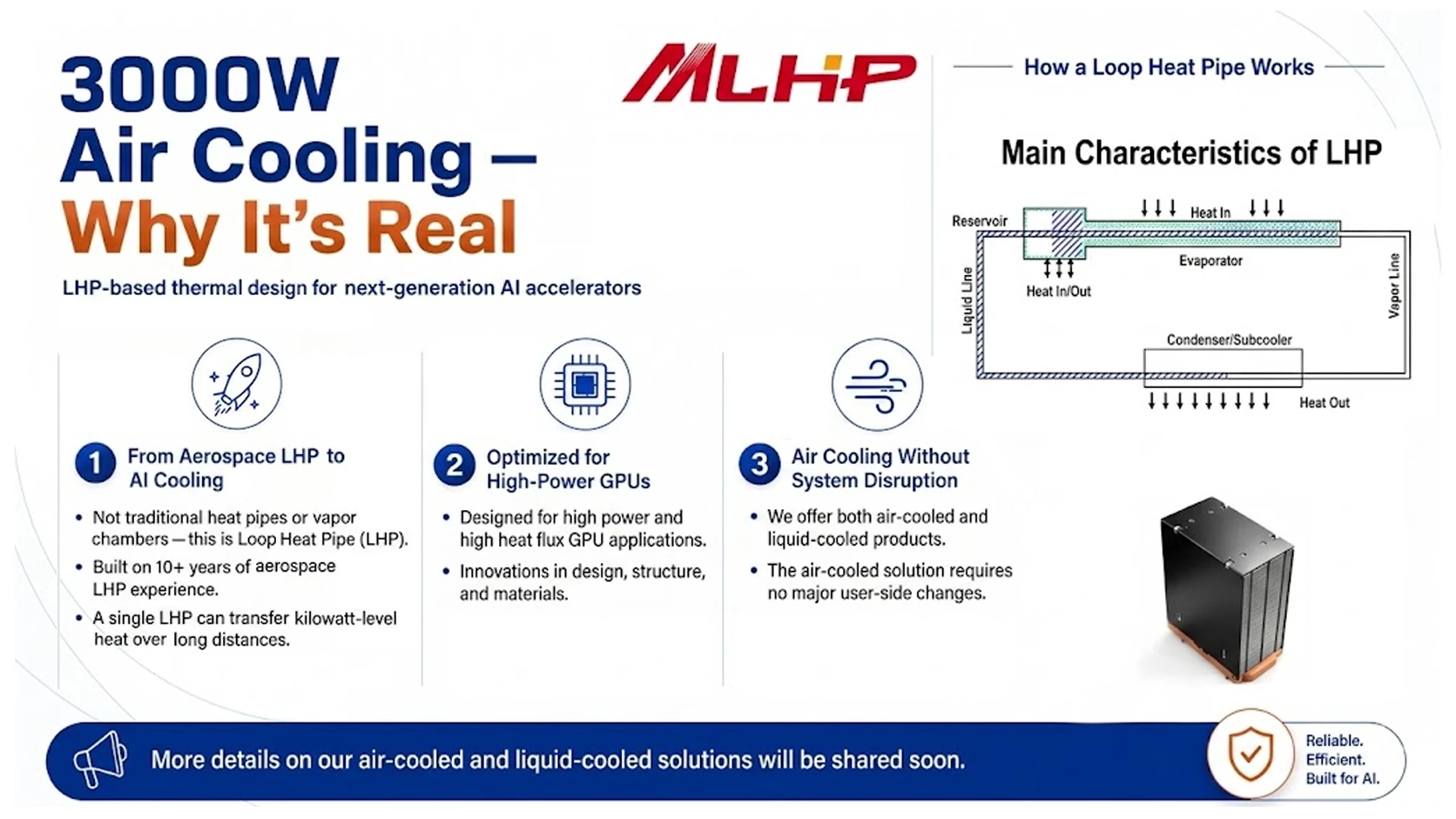
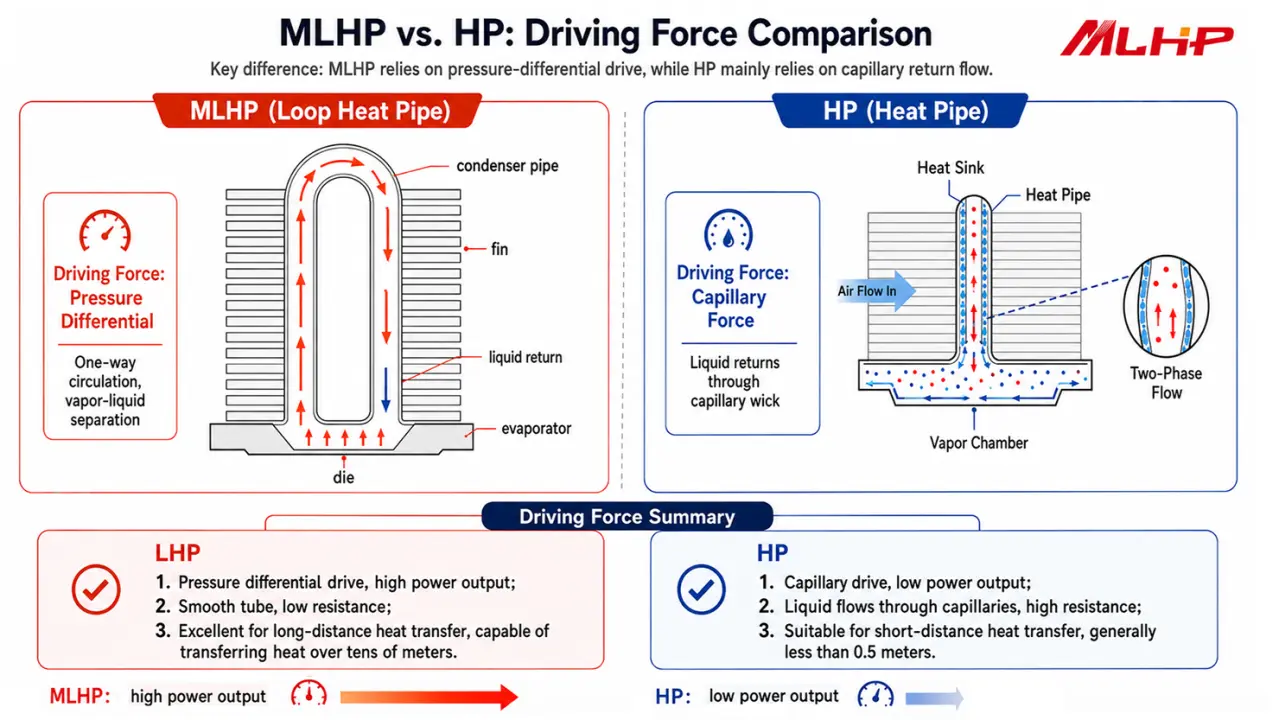
A Loop Heat Pipe (LHP) is an advanced two-phase heat transfer technology that uses phase change principles to efficiently transport heat from a high-temperature area to a heat dissipation area.
Compared with traditional thermal solutions, LHP technology provides several advantages:
- High heat transport capability
- Flexible installation orientation
- Long-distance heat transfer capability
- Improved thermal management efficiency
Unlike conventional heat pipes that rely heavily on gravity and limited internal structures, LHP systems utilize a dedicated loop design to achieve more efficient thermal performance.
For advanced GPU applications, LHP provides a powerful alternative to traditional cooling solutions by enabling higher thermal performance without significant system redesign.
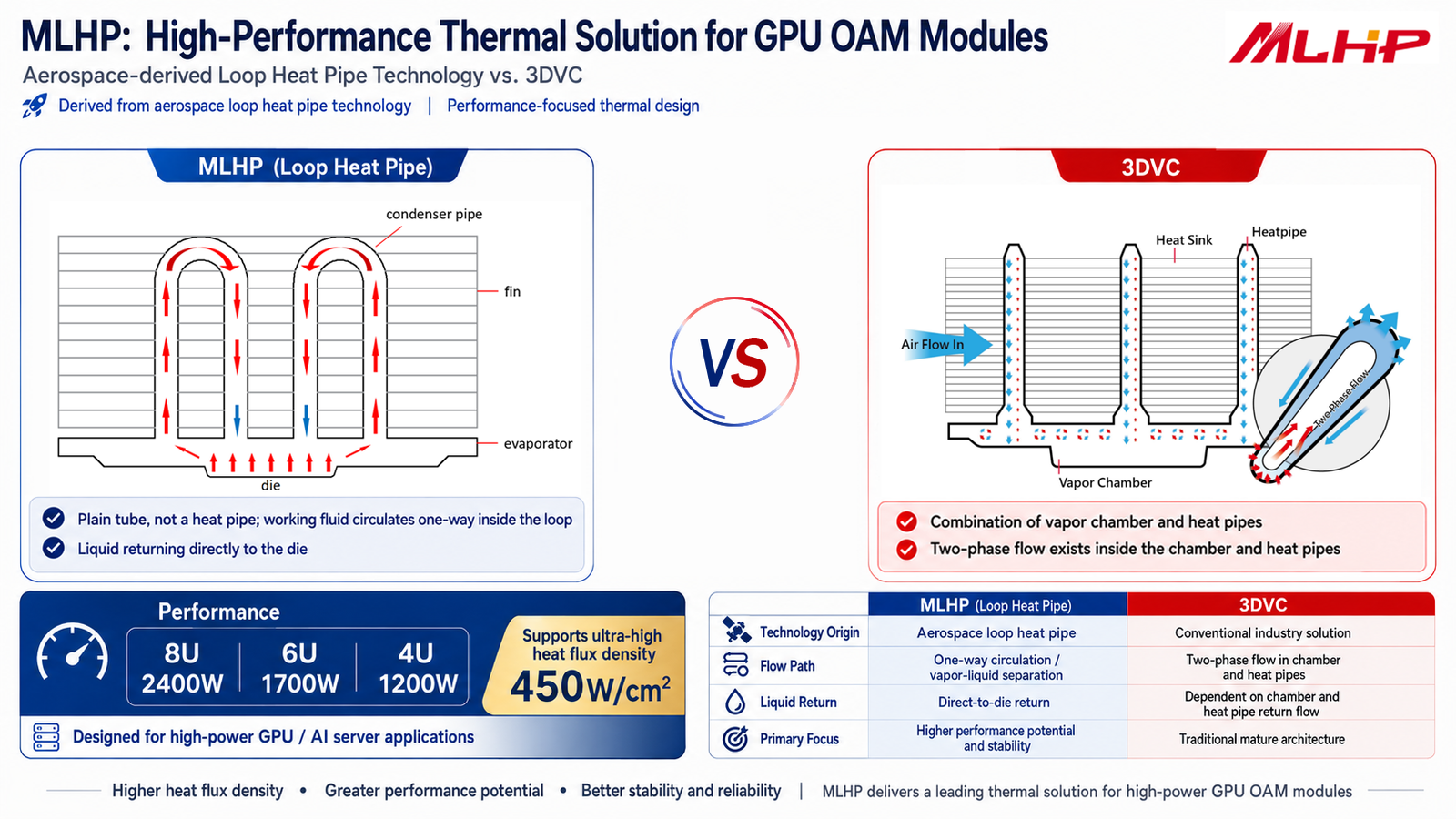
From 3D Vapor Chamber to MLHP: The Next Generation Cooling Solution
Traditional 3D vapor chamber (VC) technology has been widely adopted in many high-performance electronic devices. However, as AI accelerators continue to increase in power density, the industry requires more advanced thermal solutions.
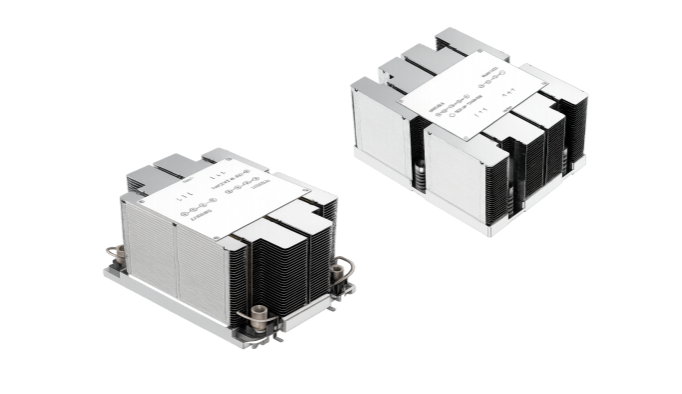
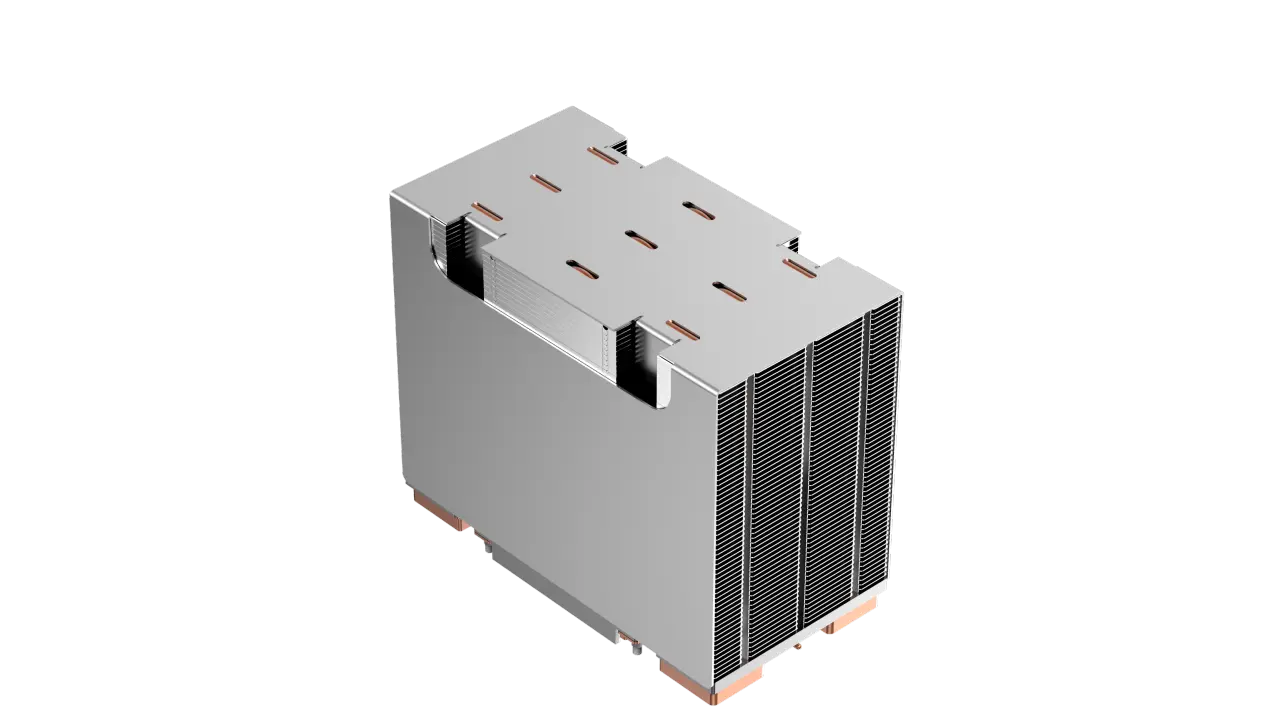
Multi-Loop Heat Pipe (MLHP) technology represents the next evolution of two-phase cooling. By utilizing multiple independent heat transfer loops, MLHP can significantly improve heat spreading capability and thermal stability.
Shengyuan’s MLHP solution is designed specifically for high-power computing applications, providing:
- Maximum heat dissipation capacity: Up to 2400W
- Extreme heat flux capability: Up to 450W/cm²
- Direct replacement for traditional thermal modules
- No adaptive modification required for existing hardware designs
LHP Cooling Applications in AI Servers and High-Performance Computing
As AI servers and GPU-based computing platforms continue to expand, thermal management has become a critical factor affecting system performance and reliability.
LHP and MLHP cooling technologies can be applied in various high-performance scenarios, including:
- AI accelerator cooling
- High-performance GPU cooling
- Data center thermal management
- Advanced server cooling systems
- Industrial computing platforms
By improving heat transfer efficiency while maintaining system flexibility, LHP technology helps engineers design more powerful and reliable computing platforms.
Why Choose Shengyuan MLHP Thermal Solutions?
Shengyuan focuses on advanced thermal management technologies designed to solve the cooling challenges of next-generation computing systems.
Through innovative MLHP and two-phase cooling solutions, Shengyuan provides high-performance thermal solutions for demanding applications where traditional cooling technologies reach their limits.
Whether for AI accelerators, high-power GPUs, or advanced computing platforms, Shengyuan’s GPU thermal solutions help customers achieve higher performance, improved reliability, and better thermal efficiency.
Conclusion: The Future of GPU Cooling Requires New Thermal Technologies
GPU air cooling is not disappearing. Its simplicity and reliability ensure that it will continue to play an important role in many applications.
However, as AI and high-performance computing demand higher power densities, traditional cooling approaches alone may no longer be sufficient.
Loop Heat Pipe and MLHP technologies provide a new path forward, enabling advanced GPU cooling performance while maintaining design flexibility and system compatibility.
For next-generation AI accelerators and high-power computing systems, Shengyuan’s advanced thermal solutions are helping redefine the future of air-cooled thermal management.