AI Computing Is Creating New Challenges for Thermal Management
Artificial intelligence is entering a new era of high-performance computing. With the development of advanced AI platforms such as NVIDIA Blackwell and future-generation architectures, chip power consumption continues to increase rapidly.
Current AI GPU platforms are already reaching 1000W–1200W power levels, while future platforms are expected to approach the 2000W range.
As computing performance increases, thermal management has become one of the biggest challenges for next-generation AI infrastructure.
Higher power density creates:
- Increased heat generation
- More concentrated hotspots
- Greater cooling system requirements
- Higher reliability demands
Traditional cooling technologies are approaching their physical limits. To support future AI servers, the industry needs a more efficient and scalable thermal solution.
Suzhou Shengrongyuan Electronic Technology Co., Ltd. believes the future of AI cooling requires innovative thermal architectures rather than simply improving existing technologies.
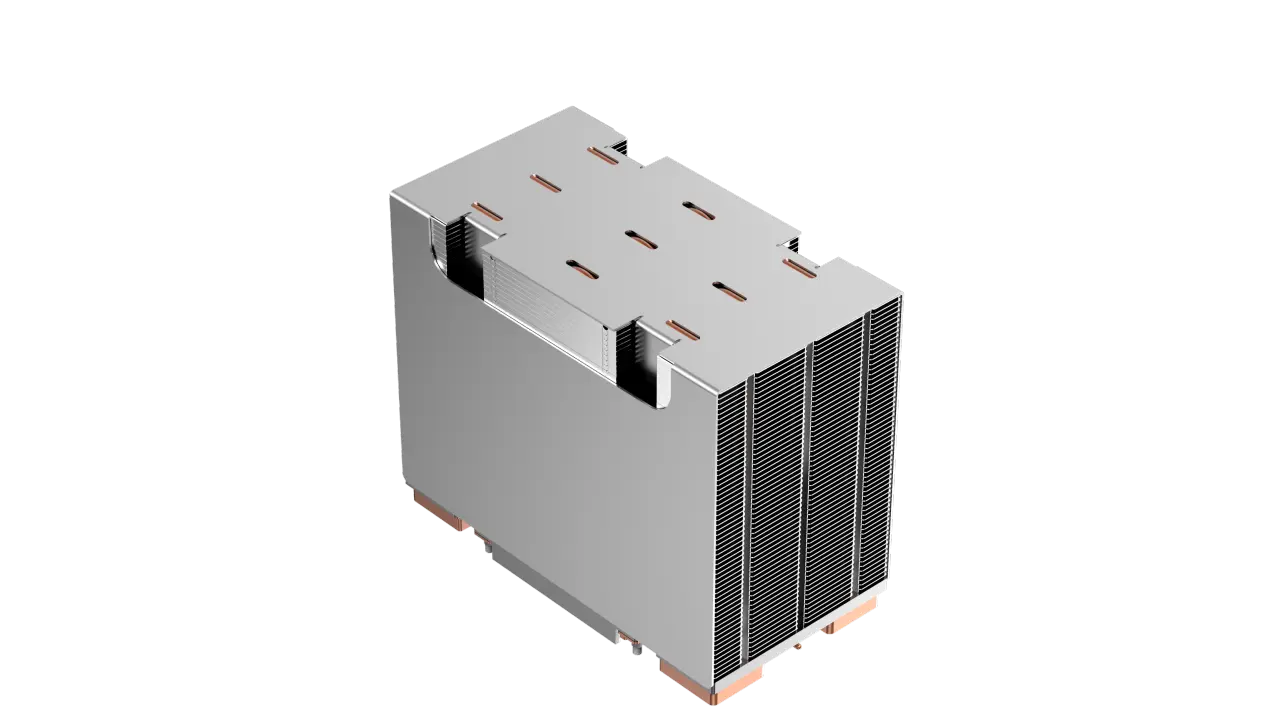
Why Traditional 3D Vapor Chambers Are Approaching the 1500W Limit
For years, 3D Vapor Chambers (3DVC) have been widely used for high-performance thermal management because of their excellent heat spreading capability.
However, when power consumption continues beyond approximately 1500W, traditional vapor chamber structures face increasing challenges.
Limitations of Conventional 3D Vapor Chamber Technology
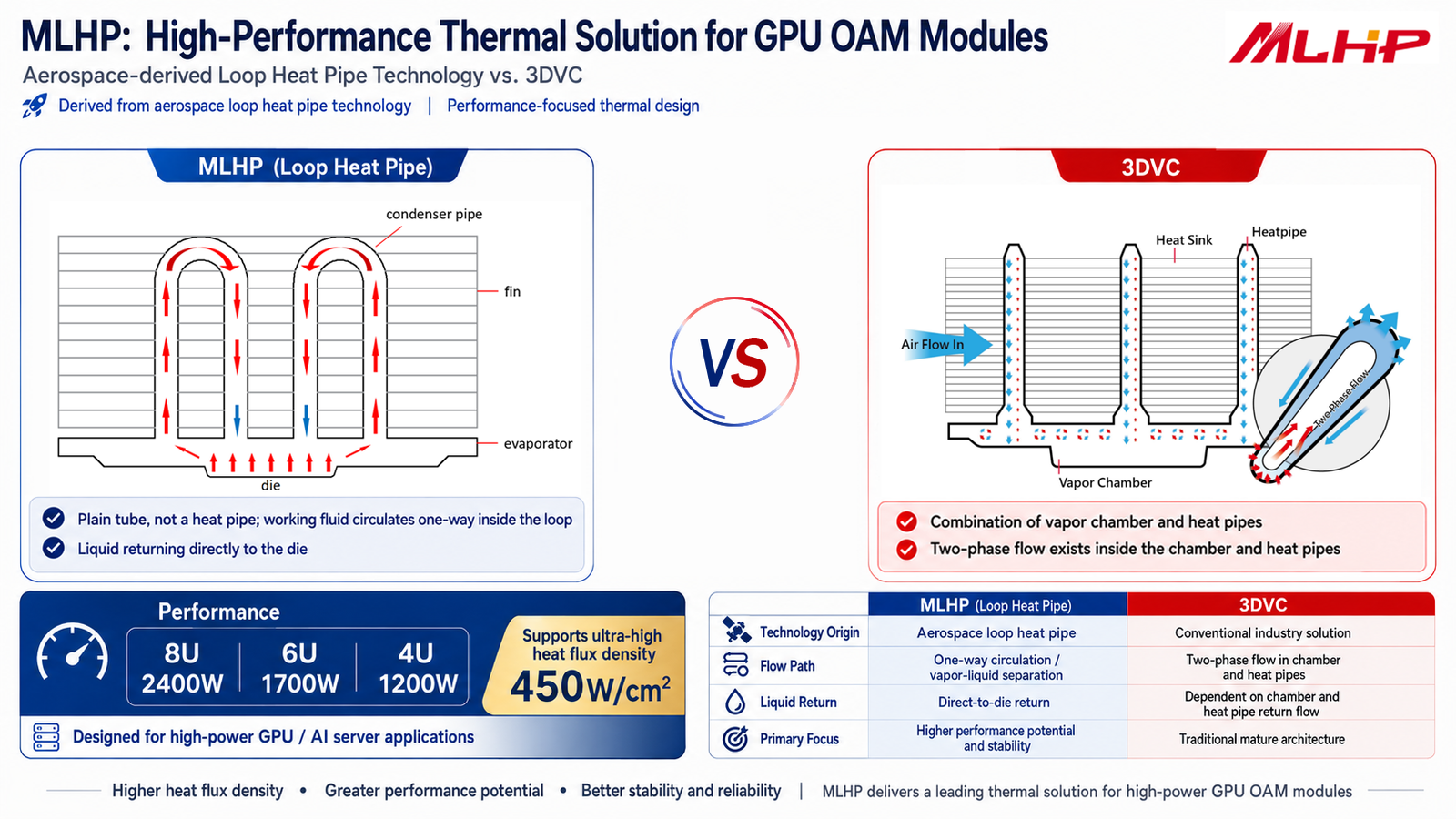
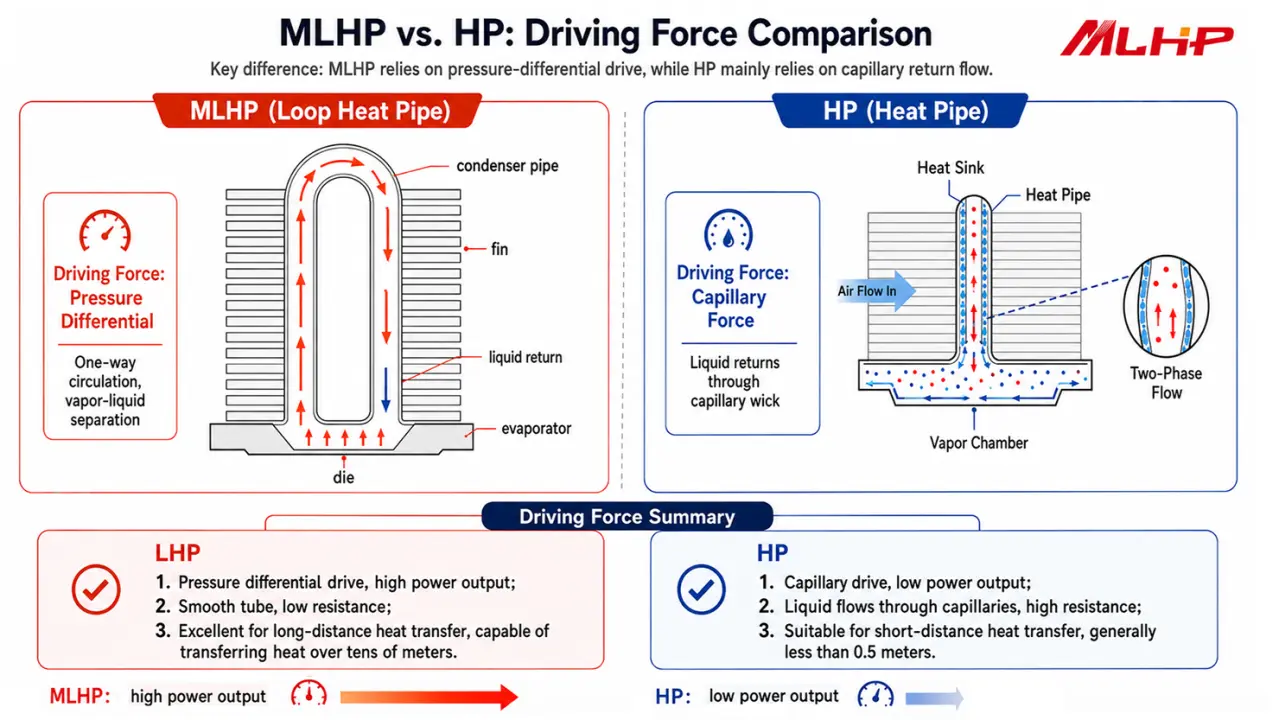
Traditional 3DVC relies on internal capillary structures to achieve liquid return during the phase-change cooling process.
Under extremely high thermal loads:
- Internal flow resistance increases
- Vapor-liquid circulation becomes more difficult
- Pressure drop becomes more significant
- Dry-out risks increase
These limitations can reduce cooling efficiency and may lead to thermal throttling under extreme operating conditions.
For future AI servers requiring 2kW-class thermal management, conventional cooling solutions face significant scalability challenges.
MLHP: Aerospace-Inspired Cooling Technology for AI Infrastructure
What Is MLHP?
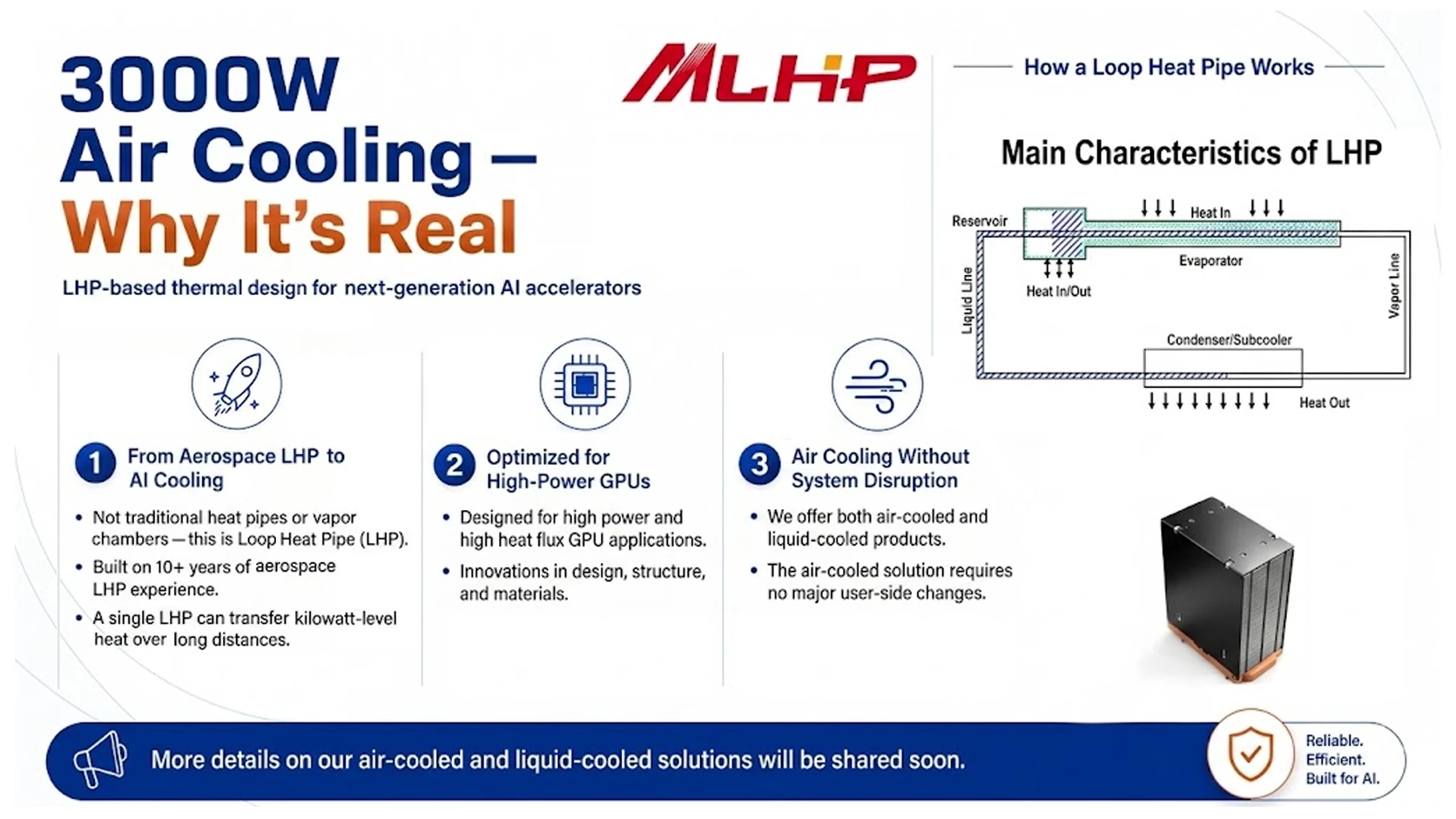
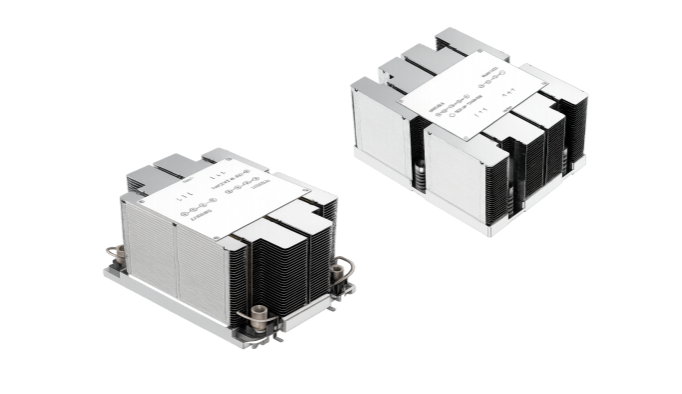
MLHP (Multi-Loop Heat Pipe) is an advanced passive two-phase cooling technology developed by Suzhou Shengrongyuan Electronic Technology Co., Ltd.
Unlike traditional heat pipes and vapor chambers, MLHP utilizes a proprietary multi-loop structure that enables multiple heat transport paths to operate cooperatively.
This innovative design improves heat transfer performance under high-power and high-heat-flux conditions.
From Aerospace Thermal Control to AI Server Cooling
The technology foundation of MLHP comes from aerospace thermal management research.
Shengrongyuan’s core technical team, originating from the Chinese Academy of Sciences (CAS), has spent more than a decade researching thermal control technologies for demanding aerospace applications.
Through years of development, this gravity-independent thermal technology has been transformed into a commercial solution designed for modern AI infrastructure.
Today, MLHP provides a new approach for:
- AI servers
- High-performance computing systems
- Advanced data center cooling applications
Why MLHP Is a Breakthrough for High-Power AI Cooling
1. Designed for 2000W+ Thermal Loads
The continuous increase in AI computing power requires cooling systems capable of handling extreme thermal loads.
MLHP is engineered specifically for next-generation platforms, including:
- High-power GPU systems
- OAM computing platforms
- AI server architectures
With 2000W+ cooling capability, MLHP provides a scalable thermal solution for future high-density computing environments.
2. High Heat Flux Handling Capability
Modern AI chips generate extremely concentrated heat within limited areas.
MLHP supports ultra-high heat flux exceeding:
200W/cm²
This capability helps improve thermal performance by:
- Reducing localized hotspots
- Enhancing heat transport efficiency
- Maintaining more stable chip operating conditions
3. Lower Thermal Resistance and Up to 8°C Temperature Reduction
Compared with conventional cooling modules under identical conditions, MLHP delivers lower thermal resistance and improved heat transfer performance.
Key benefits include:
- Reduced CPU/GPU temperatures
- Improved system stability
- Lower risk of thermal throttling
MLHP can reduce operating temperatures by up to:
7–8°C
This temperature improvement helps support reliable long-term operation of high-performance computing systems.
4. Leak-Free Passive Liquid Cooling Design
For liquid cooling systems, leakage risk remains a major concern for data center operators.
MLHP adopts a negative-pressure operating design, which significantly reduces the risk of coolant leakage.
This provides advantages including:
- Improved system reliability
- Reduced maintenance requirements
- Safer long-term deployment
The leak-free design makes MLHP suitable for demanding AI infrastructure environments where reliability is critical.
Proven Technology and Scalable Manufacturing Capability
Advanced thermal technology requires not only innovation but also reliable production capability.
Shengrongyuan’s:
Passive Two-Phase Leak-Free Liquid Cooling Technology
received the:
2024 ODCC Excellent Project Award
The project was developed alongside industry leaders including Meituan and Tencent.
Ready for Mass Deployment
At Shengrongyuan’s manufacturing base in Taicang, Suzhou, MLHP has progressed from technology development to scalable production.
Annual production capacity:
300,000 units
This manufacturing capability enables customers to move from:
Prototype Development → Testing Validation → Mass Production
with reliable supply support.
MLHP vs Traditional 3D Vapor Chamber Cooling
| Feature | Traditional 3D Vapor Chamber | MLHP |
|---|---|---|
| Cooling Structure | Conventional capillary-based structure | Multi-loop heat pipe architecture |
| Power Capability | Limited under extreme thermal loads | 2000W+ capability |
| Heat Flux Handling | Lower capability at high density | >200W/cm² |
| Thermal Stability | Higher dry-out risk | Improved heat transport performance |
| Leakage Protection | Depends on cooling system design | Negative-pressure leak-free design |
| Future AI Application | Limited scalability | Designed for next-generation AI platforms |
The Future of AI Server Thermal Management
As AI models become larger and computing requirements continue to increase, thermal management will become a critical factor in system performance.
Future AI cooling solutions must provide:
- Higher heat transport capability
- Better thermal reliability
- Lower maintenance risks
- Long-term scalability
The transition from traditional vapor chamber technology to MLHP (Multi-Loop Heat Pipe) represents a new direction for high-power AI server cooling.
Conclusion
The 1500W cooling barrier represents a major challenge for next-generation AI infrastructure.
With:
- 2000W+ cooling capability
- Heat flux exceeding 200W/cm²
- Up to 8°C temperature reduction
- Leak-free passive cooling design
MLHP provides a future-ready thermal solution for AI servers, high-performance computing platforms, and advanced data centers.
As AI computing continues to evolve, advanced thermal management technologies will play a key role in enabling reliable and scalable performance.
Contact Shengrongyuan for Advanced AI Cooling Solutions
Are you developing next-generation AI platforms beyond 2kW power levels?
Contact Suzhou Shengrongyuan Electronic Technology Co., Ltd. to explore advanced MLHP thermal solutions for your future computing systems.